Be yourself; Everyone else is already taken.
— Oscar Wilde.
This is the first post on my new blog. I’m just getting this new blog going, so stay tuned for more. Subscribe below to get notified when I post new updates.
Be yourself; Everyone else is already taken.
— Oscar Wilde.
This is the first post on my new blog. I’m just getting this new blog going, so stay tuned for more. Subscribe below to get notified when I post new updates.
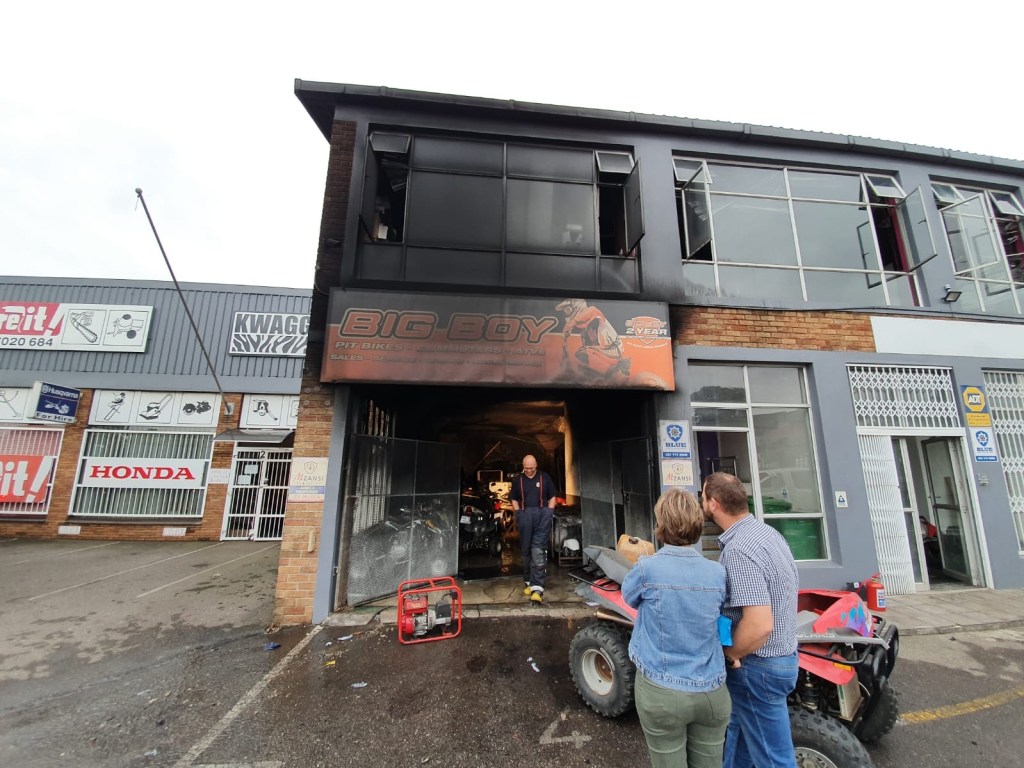
In the past year , Industry analysts have noted that fire related corporate and commercial property claims tend to increase because safety and maintenance standards are sometimes compromised in order to maintain or drive production needs .
As a result South Afrca looses millions of rands each year to Fires .
The main focus areas for Fire risk Prevention for commercial entities are :
1. Electrical Certificate of Compliance ( COC ) . For most of us this is a commodity which is unseen, as we take for granted the switching on and off of our appliances on a daily bases . In a typical building ( residential or commercial ) it is a legal requirement to confirm that the electrcical installation complies with the minimum required safety standards , a requirement of the Occupational Health and Safety Act .This needs to be obtained from a suitably trained proffesional such as a certified Electrician.
2. Automatic Fire Sprinklers ( if the occupancy and size of the building requires this in terms of current Occupancy certificates issued ). Typical systems are found in warehouses, manufacturing industries as well as hotels and large office buildings .Where provided and properlymaintained , a fire sprinkler system can save lives as well as significant damage to property. The systems are designed to react promplty and automatically in the event of a fire , much faster than any human , irrespectove of time pf day or safety concerns. However the systems can only function as intended if they are properly designed and installed , all key components are well maintained and tested and serviced on tim eto ensure its functioning and reliability .Wheer fire sprinkler systems are not provided or areonly partially installed , a robust risk management programme must be implemented to ensure Fire prevention is the absolute focus.
3. Housekeeping in the workplace . General housekeeping is the responsibility of EVERYONE , be it in your office , factory or your home . The South African Occupational Health & Safety Act has a specific section for housekeeping to promote a safe , clean and healthy working enviroment that reduces the liklihood of accidents and unsafe practices in the work place. Please ensure you are familiar with the requirements realting to your occupancy of your building and should you be renting out to a tenant that your tenant is made aware and complies with their housekeeping requirements .
4.Fire Risk Prevention / Hot Works Permits . Hot works relates to work associated with constuction/demolishion/maintenance activities that involves the use of portable gas and welding equipment as well as soldering, brazing,grinding or any similar activity that produces a spark, flame and heat . Hot work is one of the main causes of fire losses in commericial and industrial operations and has been recognised as a significant inception fire hazard for many years by both fire protection organiosations and the Insuranec Industry . The large Jacobs Durban Fire being one example of this that amounted to millions let alone the enviromental impact this fire had . The Hot works permit is required whenever hot works activities is accried out on site , except when it forms part of the daily operations on site such as in a manufacturing enviroment , in tis case the hot works permit is not required , howeevr protocols for proper safety controls, good housekeeping and firefighting equipment must be in place as per the regulatory requirement .
This is an example post, originally published as part of Blogging University. Enroll in one of our ten programs, and start your blog right.
You’re going to publish a post today. Don’t worry about how your blog looks. Don’t worry if you haven’t given it a name yet, or you’re feeling overwhelmed. Just click the “New Post” button, and tell us why you’re here.
Why do this?
The post can be short or long, a personal intro to your life or a bloggy mission statement, a manifesto for the future or a simple outline of your the types of things you hope to publish.
To help you get started, here are a few questions:
You’re not locked into any of this; one of the wonderful things about blogs is how they constantly evolve as we learn, grow, and interact with one another — but it’s good to know where and why you started, and articulating your goals may just give you a few other post ideas.
Can’t think how to get started? Just write the first thing that pops into your head. Anne Lamott, author of a book on writing we love, says that you need to give yourself permission to write a “crappy first draft”. Anne makes a great point — just start writing, and worry about editing it later.
When you’re ready to publish, give your post three to five tags that describe your blog’s focus — writing, photography, fiction, parenting, food, cars, movies, sports, whatever. These tags will help others who care about your topics find you in the Reader. Make sure one of the tags is “zerotohero,” so other new bloggers can find you, too.

 ES Brokers Blog